What You'll Gain
Our students are well-prepared. Touro’s hybrid PA program provides the training and expert mentorship that enable you to meet or exceed national standards, fostering growth in your future career.
- PANCE Readiness: The curriculum aligns with the Accreditation Review Commission on Education for the Physician Assistant (ARC-PA) standards and is designed to prepare students for success on their first attempt.
- Local Clinical Experience: Train close to your home for convenience and to engage with a community that means something to you.
- Career Advancement Without Relocation: Many other physician assistant degree programs require you to put your life on hold to travel or live in another area for a longer period of time to enter or advance your healthcare career.
Graduation Requirements
To qualify for graduation with an MS in Physician Assistant Studies, you must successfully complete all courses and rotations, totaling 124 credits, with an overall program GPA of 2.667 (B-) or better. This includes:
- Successful completion of the didactic coursework, Immersion experiences, CEED experiences and a required master’s capstone
- Successful completion of the summative evaluation
- Successful completion of all skilled clinical practice experiences (SCPE/rotations)
- Successful achievement of the program competencies.
The above requirements are reviewed by the Academic Progress Committee, following which the committee Chair (Program Director) informs the Registrar's Office that you are qualified to graduate.
Optional Doctor of Physician Assistant (DPA) Pathway
Touro's online DPA degree program allows students to complete advanced doctoral coursework in just one additional year after finishing the hybrid master's program in Physician Assistant Studies.
Although obtaining a Doctor of Physician Assistant degree is not a requirement for clinical practice, it enhances professional skills and opens greater opportunities, paving the way for advanced clinical and research careers that contribute to the knowledge and potential within the profession.
Explore Touro Online DPA
FAQs: Curriculum & Clinicals
How much of the hybrid PA program is online?
The didactic phase is primarily online, with two in-person components. Immersions are once per semester of the didactic phase and once in your final semester as your clinical year ends to complement online learning. With our Clinical Experiences in Early Didactic (CEED), you will also have a few hours of clinical experiences in your local community towards the end of your didactic year. Then, clinical rotations are in-person and as local as possible, with some clinical curriculum components online.
What is a typical week in the didactic phase?
A typical week during the 16 months of online didactic coursework consists of 24-28 hours of virtual lectures and small group experiences and, beginning in term three, four hours of clinical experience per week.
How often do I need to travel?
You’ll travel five times to the Touro campus for short immersion experiences throughout the program. This may be a plane ride or a drive, depending on how far you are from our campus. Clinical placements are coordinated to be as near and convenient to you as possible and within driving distance whenever possible.
Are all clinicals local?
We do our best to accommodate your needs and keep your clinical rotations within a reasonable distance from your home or the rotation location requested. However, if you request specialty rotations or if your residence is located far from these options, your rotations may be scheduled at a greater distance.
Am I responsible for my own transportation?
Yes, you are responsible for your travel arrangements and expenses. However, the program includes estimates for these additional costs within your student budget.
How can I take an anatomy lab or learn physical diagnosis skills in an online program?
The anatomy lab combines visual, interactive, and case-based learning, using high-quality 3D platforms, virtual dissection tools, and labeled cadaver images, allowing students to visualize structures in context.
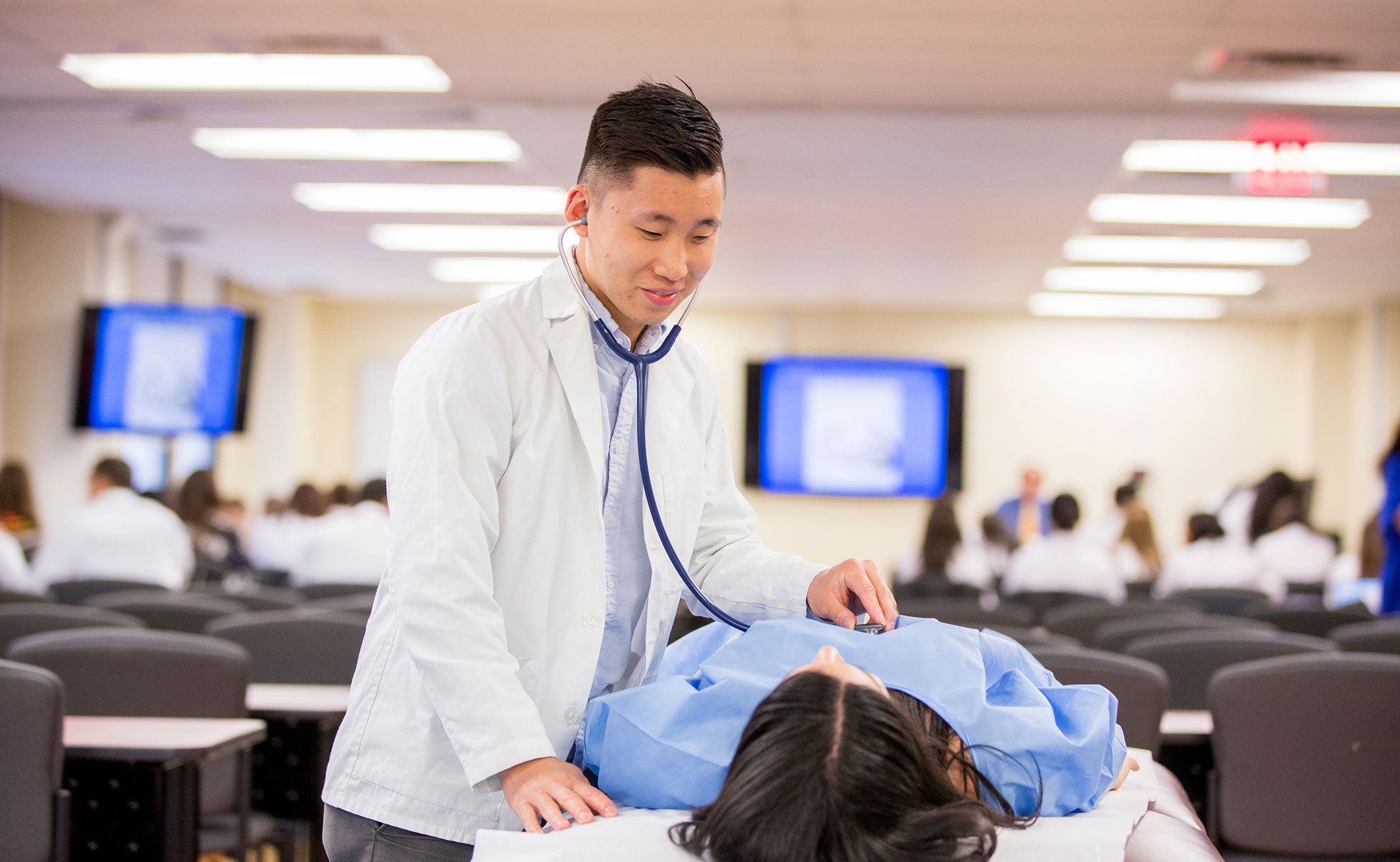
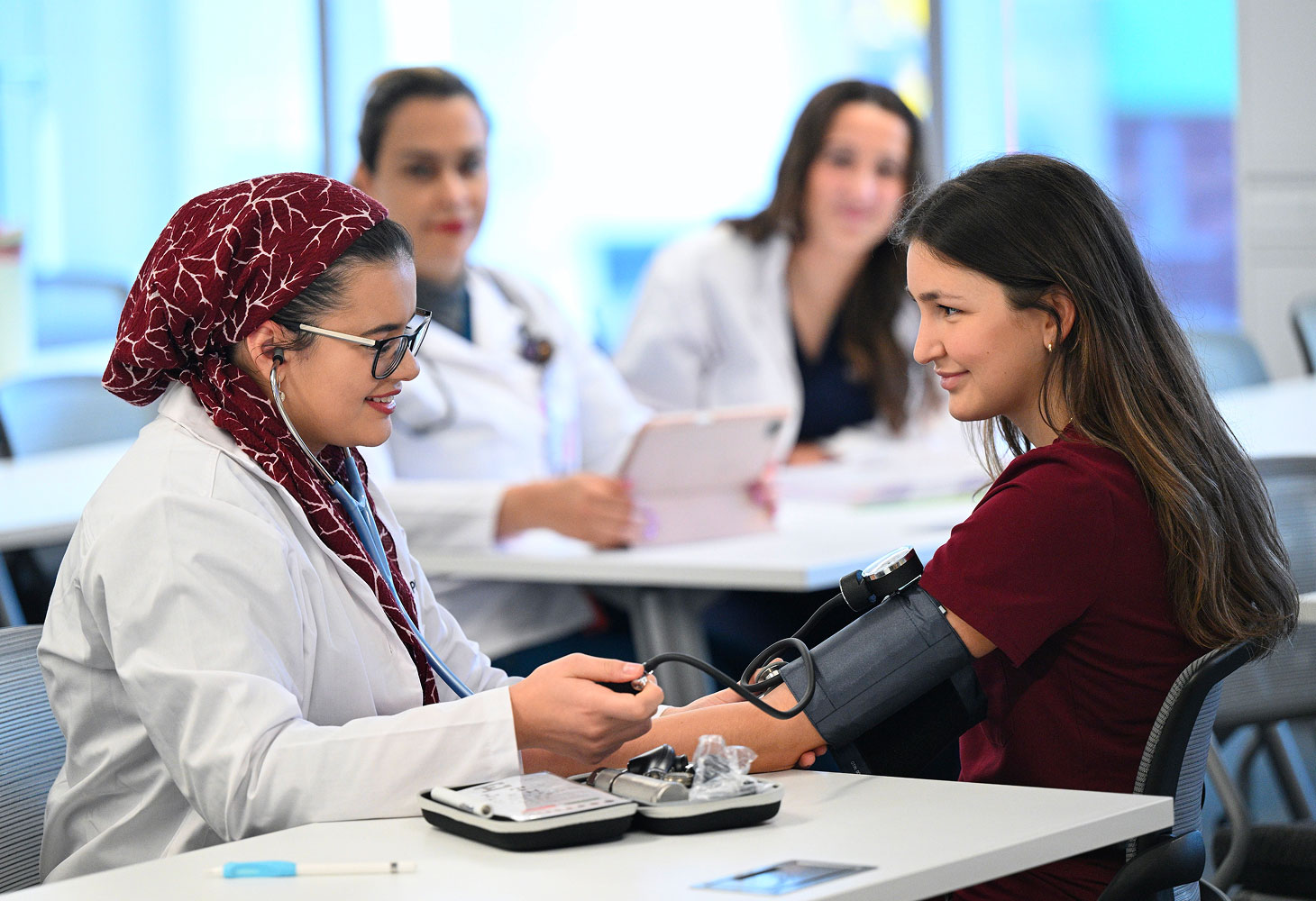
You will learn exam techniques, normal findings, and clinical reasoning through online courses that include virtual simulations. However, a portion of the in-person sessions will focus on developing physical exam skills. These critical face-to-face practice sessions (immersions) provide essential supervised practice and allow for skill refinement through direct feedback. The Clinical Experience in Early Didactic (CEED) also develops hands-on physical diagnosis skills.