
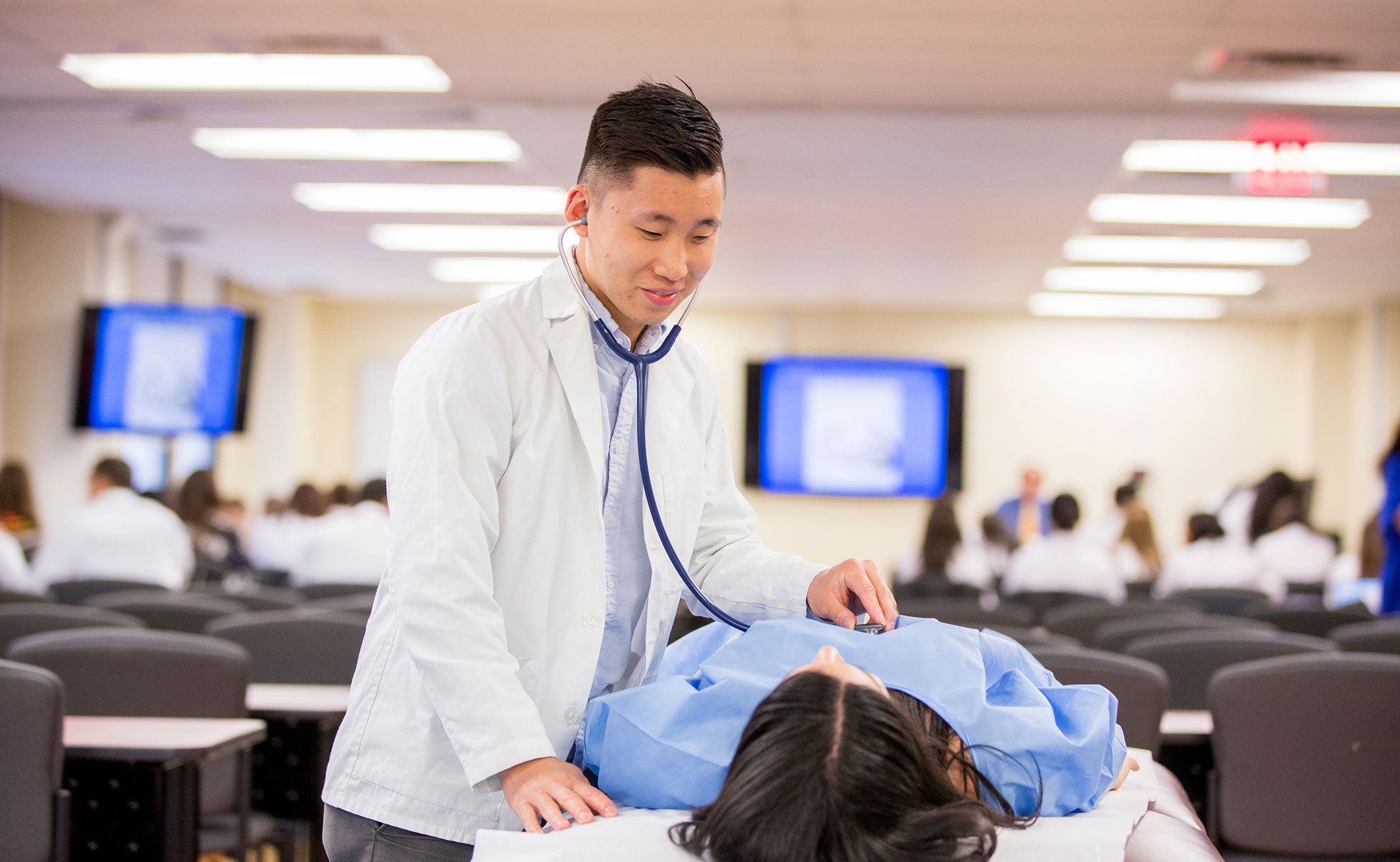
Professional competencies for Physician Associate (PA) students include the effective and appropriate application of medical knowledge, communication skills, patient care, professionalism, and an unwavering commitment to continual learning, professional growth, and the physician-PA team. The following are the expected competencies for our PA Students and Graduates.
Medical Knowledge (MK)
Medical knowledge includes synthesis of pathophysiology, patient presentation, differential diagnosis, patient management, surgical principles, health promotion, and disease prevention. PAs must demonstrate core knowledge about established and evolving biomedical and clinical sciences and apply this knowledge to patient care in their practice area. In addition, PAs are expected to demonstrate an investigative and analytic thinking approach to clinical situations. PAs are expected to understand, evaluate, and apply the following to clinical scenarios:
- Evidence-based medicine.
- Scientific principles related to patient care.
- Etiologies, risk factors, underlying pathologic processes, and epidemiology for medical conditions.
- Signs and symptoms of medical and surgical conditions.
- Appropriate diagnostic studies.
- Management of general medical and surgical conditions, including pharmacologic and other treatment modalities.
- Interventions for the prevention of disease and health promotion/maintenance.
- Screening methods to detect conditions in an asymptomatic individual.
- History and physical findings and diagnostic studies to formulate differential diagnoses.
Interpersonal & Communication Skills (IP&C)
Interpersonal and communication skills encompass the verbal, nonverbal, written, and electronic exchange of information. PAs must demonstrate interpersonal and communication skills that result in effective information exchange with patients, patients’ families, physicians, professional associates, and others within the health care system. PAs are expected to:
- Create a therapeutic and ethically sound relationship with patients.
- Use effective communication skills to elicit and provide information.
- Adapt communication style and messages to the context of the interaction.
- Work effectively with health care professionals.
- Demonstrate adaptability and flexibility.
- Accurately and adequately document information regarding care for medical, legal, and quality purposes.
Patient Care (PC)
Patient care includes patient- and setting-specific assessment, evaluation, and management. PAs must demonstrate effective, safe, high-quality, and equitable care. PAs are expected to:
- Work effectively with health care professionals to provide patient-centered care.
- Demonstrate compassionate and respectful behaviors when interacting with patients and their families.
- Obtain essential and accurate information about their patients via history and physical examination.
- Make decisions about diagnostic and therapeutic interventions based on patient information and preferences, current scientific evidence, and informed clinical judgment.
- Develop and implement patient management plans.
- Counsel and educate patients and their families.
- Perform medical and surgical procedures essential to their area of practice.
- Provide health care services and education for disease prevention and health maintenance.
Professionalism (P)
Professionalism is the expression of positive values and ideals in the delivery of care. Foremost, it involves prioritizing the interests of those served above one’s own. PAs must acknowledge their professional and personal limitations. PAs must demonstrate a high level of responsibility, ethical practice, sensitivity to a diverse patient population. PAs are expected to demonstrate:
- Understanding the appropriate role of the physician assistant.
- Respect, compassion, and integrity.
- Accountability to patients, society, and profession.
- Commitment to ethical principles pertaining to the provision or withholding of clinical care, confidentiality of patient information and informed consent.
- Sensitivity and responsiveness to patients.
Practice-Based Learning & Improvement (PBL)
Practice-based learning and improvement includes the processes through which PAs critically analyze their own practice experience, the medical literature, and other information resources for self- and practice-improvement. PAs must be able to assess, evaluate, and improve their patient care practices. PAs are expected to:
- Locate, appraise, and integrate evidence from scientific studies on their patient's health.
- Apply knowledge of study designs to appraise clinical literature and other information on diagnostic and therapeutic effectiveness.
- Utilize information technology to manage information, access medical information, and support their own education.
Systems-Based Practice (SBP)
Systems-based practice encompasses the societal, organizational, and economic environments in which health care is delivered. PAs must demonstrate an awareness of and responsiveness to the larger healthcare system. PAs should work to improve the healthcare system of which their practices are a part. PAs are expected to:
- Practice cost-effective health care that does not compromise the quality of care.
- Advocate quality patient care in dealing with system complexities.
- Apply medical information to provide effective, efficient patient care.
