
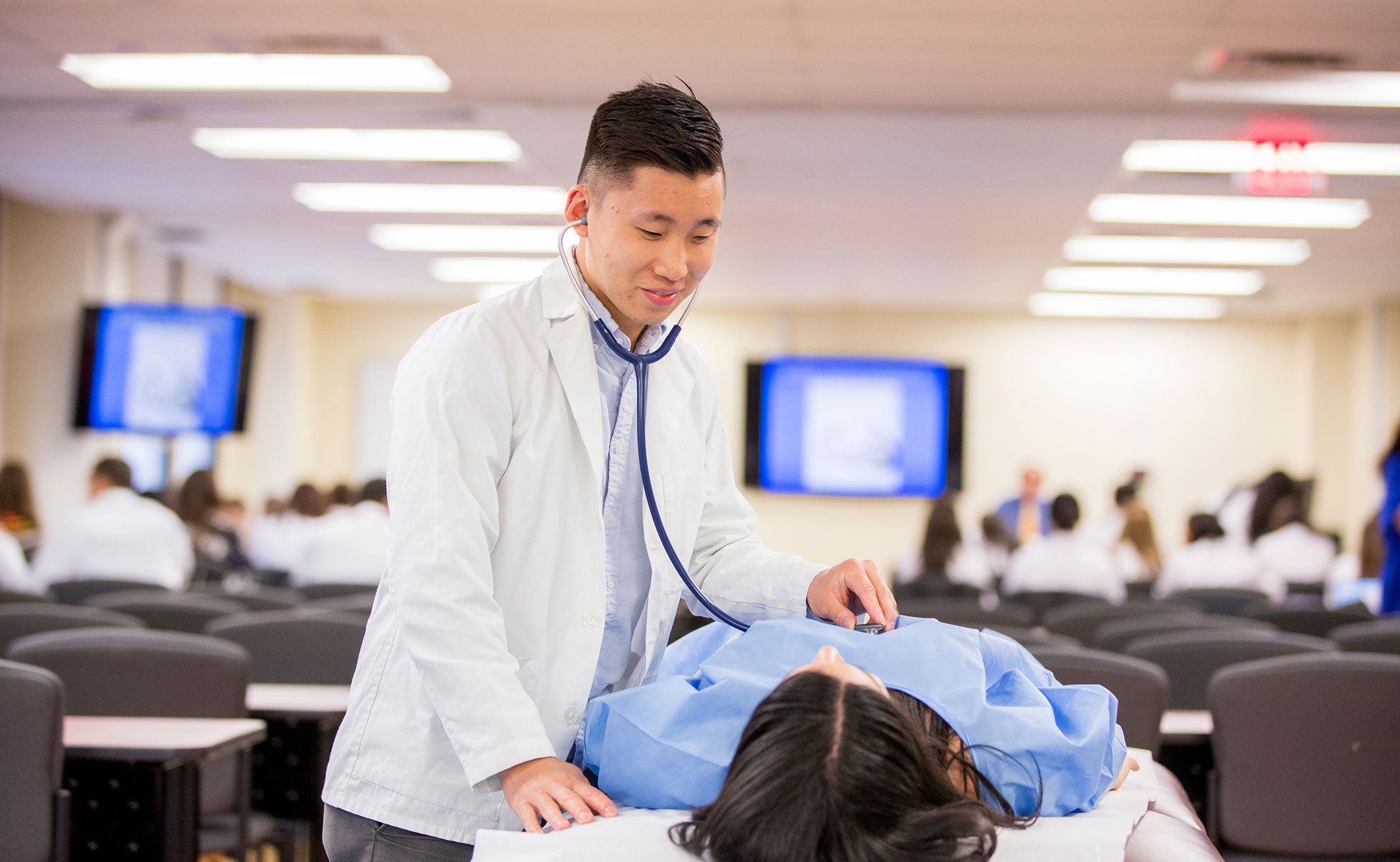
On your clinical rotations, you put into practice the skills and knowledge you’ve gained so far. Out on rotation, under the supervision of clinical preceptors, you’ll further develop your skills as a health care practitioner, as a physician assistant, and as a member of the health care team.
Rotations take place in hospitals, clinics, or private settings and entail a full-time commitment during regular working hours. Each rotation is five weeks. Students are not required to provide or solicit clinical sites or preceptors.
Travel to Clinical Placements
The Physician Assistant program is committed to providing high-quality and diverse clinical education experiences for all students. The program will make reasonable efforts to identify and assign Clinical Experience in Early Didactic (CEED) and clinical rotation sites within a range of 100 miles of a student’s primary residence. However, placement within this distance is not guaranteed.
Due to variability in clinical site availability and educational requirements, students should be prepared to travel more than 100 miles for some specialized clinical rotations. In these cases, this may require the student to temporarily relocate to complete that rotation.
All costs associated with travel, housing, meals, and other incidental expenses during clinical rotations are the sole responsibility of the student. Clinical expenses are included in the student budget. Students are encouraged to plan accordingly and consider these additional expenses when preparing for the clinical phase of the program. It may be necessary to discuss your student budget with financial aid.
MTPA 800 - Family Medicine (Credits 5)
This core rotation allows students to acquire the skills and knowledge necessary to serve a diverse cross-section of the patient population and to treat patients of all ages in an ambulatory care setting. Students learn the psychosocial aspects of health care and how to provide family-oriented primary care services, such as acute and chronic disease management, health promotion, maintenance, patient education, and disease prevention. Students develop the ability to analyze and synthesize medical information, reason independently, and apply medical decision-making and problem-solving concepts to complex patient presentations. In addition, students are familiarized with the differences in the coordination, management, and follow-up of the outpatient as compared to the hospitalized patient and with recognizing when to refer the patient for hospital admission or specialty care.
MTPA 801 - Emergency Medicine (Credits 5)
This core rotation allows students to learn how to systematically evaluate and manage patients with acute medical and surgical emergencies, perform diagnostic and therapeutic procedures, and participate in cardiac and trauma resuscitations. Students incrementally develop the ability to analyze and synthesize medical information, reason independently, and apply medical decision-making and problem-solving concepts to complex patient presentations.
MTPA 802 - Internal Medicine (Credits 5)
This core rotation allows students to learn how to evaluate internal medicine patients, inpatient or outpatient, and follow their progress medically. Students will learn how to correlate history and physical findings with the patient’s physiological and laboratory data and emotional state to arrive at a differential diagnosis, formulate a treatment plan, and appreciate how to provide continuity of care. Students develop skills and demonstrate competency in performing and interpreting various medical procedures and tasks.
MTPA 803 - Surgery (Credits 5)
This core rotation allows the student to become involved in all phases of diagnosis and treatment of the surgical patient, including pre-operative, operative, and post-operative care. The student will learn the practical management of various surgical conditions, as well as wound healing and wound care. Students will develop the ability to analyze and synthesize medical information, reason independently, and apply the concepts of medical decision-making and problem-solving to complex patient presentations.
MTPA 804 - Pediatrics (Credits 5)
This core rotation allows the student to become involved in all phases of childcare from birth to adolescence. The student will learn to recognize and manage common childhood illnesses, assess normal and abnormal growth and development, and provide preventive health care services. Students will develop the ability to analyze and synthesize medical information, reason independently, and apply the concepts of medical decision-making and problem-solving to complex patient presentations. Students will become familiar with routine screening techniques and the diagnosis, treatment, and follow-up of childhood illnesses.
MTPA 805 - Women’s Health (Credits 5)
This core rotation allows the student to gain practical experience in evaluating obstetrical and gynecological patients. Students become familiar with the care and management of antepartum and postpartum patients and may assist in deliveries. Students perform pre-natal care, including routine examinations of expectant mothers as they progress through their pregnancies. The students will become familiar with the care and management of various gynecological problems and health promotion and disease prevention of the female reproductive tract. Students will develop the ability to analyze and synthesize medical information, reason independently, and apply medical decision-making and problem-solving concepts to complex patient presentations.
MTPA 806 - Behavioral Medicine (Credits 5)
This core rotation allows the student to gain practical experience in evaluating and managing patients with various behavioral health problems. The student will perform basic psychiatric evaluations and develop skills in performing mental status examinations and psychiatric interviews while incorporating behavioral dynamics in this patient population. The student will learn a biopsychosocial approach to psychiatric, cognitive, and behavioral problems. The student will review and monitor medications and support the clinical management plan for patients receiving psychiatric evaluation and treatment. The student will develop the ability to analyze and synthesize medical information, to reason independently, and to apply the concepts of team-based medical problem-solving and patient-centered care decisions.
MTPA 810 - Advanced Clinical Medicine (Credits 2)
This course will expand upon a specific area of clinical medicine, giving the student an enhanced understanding of medicine. The course will cover the etiology, clinical manifestations, diagnosis, treatment, and prognosis of diseases in the area selected by the student. The pathophysiology of the organ system in relation to the various disease processes is integrated with clinical presentations, historical and physical findings, and laboratory and radiographic test results. Emphasis is placed on applying new medical knowledge to clinical situations, diagnostic problem-solving and differential diagnosis, and issues of patient education and preventive medicine.
MTPA 820 - Advanced Pharmacology (Credits 2)
This course will expand upon the pharmacology and therapeutics used in the treatment of disease processes, giving students an enhanced understanding of pharmacodynamics and therapeutics, their application in patient care, their implication on clinical practice guidelines, and information utilization for optimal clinical outcomes.
MTPA 830 - Advanced Clinical Training I (Credits 5)
This is the first of two elective learning experiences of 5 weeks duration in a specific area of medicine. The student will gain a more advanced level of clinical experience in an area or specialty of future employment. Students are expected to analyze and synthesize medical information, reason independently, and apply the concepts of medical decision-making and problem-solving to complex patient presentations.
MTPA 831 - Advanced Clinical Training II (Credits 5)
This is the second of two elective learning experiences of 5 weeks duration in a specific area of medicine. The student will gain a more advanced level of clinical experience in an area or specialty of future employment. Students are expected to analyze and synthesize medical information, reason independently, and apply the concepts of medical decision-making and problem-solving to complex patient presentations.
MTPA 840 - Behavioral Medicine Elective (Credits 5)
This elective rotation allows students to acquire the skills and knowledge necessary to serve a broad cross-section of the patient population and to treat patients of all ages in an inpatient/outpatient psychiatric setting. Students learn the biopsychosocial approach to mental illness. In this elective rotation, students will evaluate and manage patients with various psychiatric problems, do follow-up evaluations of those patients seen in the Psychiatric Emergency Room, and develop skills in the performance of mental status exams and psychiatric interviews. Students study the diagnoses and treatment plans of child and adolescent patients and the daily, intensive, long-term treatment of severely disturbed outpatients to gain an understanding of psychopathology, therapeutic community, and team functioning. Students incrementally develop the ability to analyze and synthesize medical information, reason independently, and apply medical decision-making and problem-solving concepts to complex patient presentations. Students are expected to attend scheduled lectures.
MTPA 841 - Cardiology Elective (Credits 5)
This elective rotation is available to students who have completed the required Internal Medicine rotation. The rotation allows students to concentrate on learning the work-up, diagnosis and medical management of patients with cardiac diseases. Students work directly with attending physicians and/or physician assistants in conjunction with the health care team. Students attend rounds, grand rounds, scheduled lectures, and conferences while on the service. Students are expected to analyze and synthesize medical information, reason independently, and apply the concepts of medical decision-making and problem-solving to complex patient presentations.
MTPA 842 - Emergency Medicine Elective (Credits 5)
Students are assigned to work under the supervision of licensed physicians and/or physician assistants and in conjunction with the healthcare team in the emergency room setting. In this elective Emergency Medicine rotation, students rotate through the various areas of the Emergency Department and are exposed to medical, surgical, pediatric, orthopedic, and psychiatric emergencies. Students learn to systematically evaluate and manage patients with acute medical and surgical emergencies, perform diagnostic and therapeutic procedures, and participate in cardiac and trauma resuscitations. Students incrementally develop the ability to analyze and synthesize medical information, reason independently, and apply medical decision-making and problem-solving concepts to complex patient presentations.
MTPA 843 - Family Medicine Elective (Credits 5)
Students are assigned to an outpatient department, family medical clinic, or office practice and work under the supervision of licensed family medicine physicians and/or physician assistants and in conjunction with the health care team. This elective rotation in Family Medicine provides students with another opportunity to acquire the skills and knowledge necessary to serve a broad cross-section of the patient population and to treat patients of all ages in an ambulatory care setting. Students learn psychosocial aspects of health care and how to provide family-oriented family medicine services, such as acute and chronic disease management, health promotion, maintenance, patient education, and disease prevention. Students incrementally develop the ability to analyze and synthesize medical information, reason independently, and apply medical decision-making and problem-solving concepts to complex patient presentations. In addition, students are familiarized with the differences in the coordination, management and follow-up of the outpatient as compared to the hospitalized patient, and with recognizing when to refer the patient for hospital admission.
MTPA 844 - Geriatric Elective (Credits 5)
Students are assigned to work under the supervision of licensed physicians and/or physician assistants in conjunction with the healthcare team to gain practical clinical experience in working with the elderly who often suffer from chronic diseases. In this elective rotation, students are exposed to various common geriatric problems. This rotation stresses characteristics of the normal aging process so that students may better identify and address deviations from the norm. Students gain exposure to end-of-life issues and psychosocial dynamics. Students incrementally develop the ability to analyze and synthesize medical information, reason independently, and apply medical decision-making and problem-solving concepts to complex patient presentations. Students should be able to differentiate the care of the elderly and those patients suffering from chronic diseases. Emphasis is placed on the geriatric patient for both acute and ongoing care. Students are exposed to a wide variety of common geriatric medicine problems.
MTPA 846 - Internal Medicine Elective (Credits 5)
Students are assigned to work directly under the supervision of the medical house staff or in an outpatient internal medicine setting. Emphasis is placed on the hospitalized, acute, non-surgical adult patient. In this elective rotation in Internal Medicine, students medically evaluate hospitalized patients and follow their daily progress. By doing so, students learn how to correlate history and physical findings with the patient’s physiological and laboratory data and emotional state, arrive at a differential diagnosis, formulate a treatment plan, and appreciate how to provide continuity of care. Students develop skills and demonstrate competency in performing and interpreting various medical procedures and tasks. In certain settings, there are opportunities to work with the house staff who are assigned to the medical clinic area to monitor and follow up on patient management problems and to participate in the formulation of their management plans. If the student is in an outpatient setting, they will participate in in-patient rounds with the MD/DO/PA/NP. Students incrementally develop the ability to analyze and synthesize medical information, reason independently, and apply medical decision-making and problem-solving concepts to complex patient presentations.
MTPA 847 - Medicine Subspeciality Elective (Credits 5)
This medicine subspecialty elective rotation is available to students who have completed the required Internal Medicine rotation. The medicine subspecialty rotations allow students to concentrate on the work-up, diagnosis, and medical management of patients in medicine subspecialties. Students work directly with attending physicians and/or physician assistants in conjunction with the health care team. Students may attend rounds, grand rounds, scheduled lectures, and conferences while on the service for in-patient clinical experiences. Students are expected to analyze and synthesize medical information, reason independently, and apply the concepts of medical decision-making and problem-solving to complex patient presentations. Students are assigned to a clinic, outpatient practice, and/or inpatient location in the assigned medicine subspecialty.
MTPA 848 - Obstetrics/Gynecology Elective (Credits 5)
Students are assigned to work under the supervision of licensed physicians and/or physician assistants in conjunction with the healthcare team in an inpatient or outpatient OB/GYN department, clinic, or office. In this elective OB/GYN rotation, students gain practical experience in evaluating obstetrical and gynecological patients. Students become familiar with the care and management of antepartum and post-partum patients and occasionally assist in deliveries. Students perform pre-natal care, including routine examinations of expectant mothers as they progress through their pregnancies. Students also become familiar with the care and management of a wide variety of gynecological problems, as well as health promotion and disease prevention of the female reproductive tract. Students develop competency in the performance of annual exams and Pap smears, counseling for birth control, infertility, menstruation, and sexuality. Students incrementally develop the ability to analyze and synthesize medical information, reason independently, and apply medical decision-making and problem-solving concepts to complex patient presentations.
MTPA 849 - Orthopedics Elective (Credits 5)
This elective clinical learning experience occurs in the clinic and hospital (or ambulatory surgery) settings. Students are assigned to work directly with attending physicians and/or physician assistants in conjunction with the Department of Orthopedic Surgery healthcare team. Students develop proficiency in evaluating, diagnosing, and managing orthopedic problems in the adult and pediatric populations. They can observe and "scrub in" to assist in orthopedic surgical cases, reinforce knowledge of sterile technique and the proper use of surgical instruments, and participate in the preoperative, intraoperative, and postoperative management of the orthopedic patient. Students attend rounds, grand rounds, scheduled lectures, and conferences while on the Orthopedic Surgery service. Students are expected to analyze and synthesize medical information, reason independently, and apply the concepts of medical decision-making and problem-solving to complex patient presentations.
MTPA 850 - Pediatrics Elective (Credits 5)
Students are assigned to work under the supervision of licensed physicians and/or physician assistants and in conjunction with the healthcare team in either an inpatient or an outpatient pediatric department, clinic, or office. This elective Pediatric rotation emphasizes the care of the child from birth to adolescence. Students learn to recognize and manage common childhood illnesses, assess variations in normal growth and development, and provide preventive healthcare services, including immunizations, routine screening, and parental and interventional counseling. Students incrementally develop the ability to analyze and synthesize medical information, reason independently, and apply medical decision-making and problem-solving concepts to complex patient presentations.
MTPA 851 - Surgery Subspeciality Elective (Credits 5)
This surgical subspecialty elective rotation is available to students who have completed the required surgery rotation. The surgical subspecialty rotations allow students to concentrate on the work-up, diagnosis, and surgical management of patients in surgical sub-specialties. Students work directly with attending physicians and/or physician assistants in conjunction with the health care team. They can "scrub in" to assist in surgical cases and develop proficiency in the surgical work-up, intra-operative intervention, and post-operative management of patients. They also follow patients in the critical care setting and on the floors. Students are expected to analyze and synthesize medical information, reason independently, and apply the concepts of medical decision-making and problem-solving to complex patient presentations.
MTPA 852 - Surgery Elective (Credits 5)
Students are assigned to work under the supervision of licensed surgeons and/or physician assistants and in conjunction with the healthcare team in the Department of Surgery. In this elective surgery rotation, students become involved in all phases of diagnosis and treatment of the surgical patient, including pre-operative, operative, and post-anesthesia care. They learn the practical management of fluid, electrolyte, and nutritional disturbances, post-operative infections, as well as wound healing and wound care. They scrub into the operating room, observe and assist in various surgical procedures as assigned by the preceptor(s), and also become involved in managing critically ill surgical patients. Students incrementally develop the ability to analyze and synthesize medical information, reason independently, and apply medical decision-making and problem-solving concepts to complex patient presentations. Students are expected to attend daily rounds, grand rounds, morbidity & mortality conferences, and scheduled lectures while on the surgery service. Students are assigned to work directly with attending physicians and/or residents, PA staff in the surgery department.
**Note that at the conclusion of the clinical phase of the program, a student in need of academic support may be enrolled in MTPA 695 Integration Knowledge for Clinical Practice. This is a 5-credit problem-based course to enhance knowledge and critical thinking to assure success in the student’s summative performance, passing the PANCE and achieving competence for entry into clinical practice. The student enrolled in this course will NOT incur any additional costs (tuition or fees). Enrollment in this course will replace either advanced clinical training or an elective. This is a credited course to assure the student maintains full matriculation throughout the program. It does not extend the graduation date.
